The Future of Workforce Management in the Age of Smart Technology
- Mira roy
- Dec 26, 2025
- 3 min read

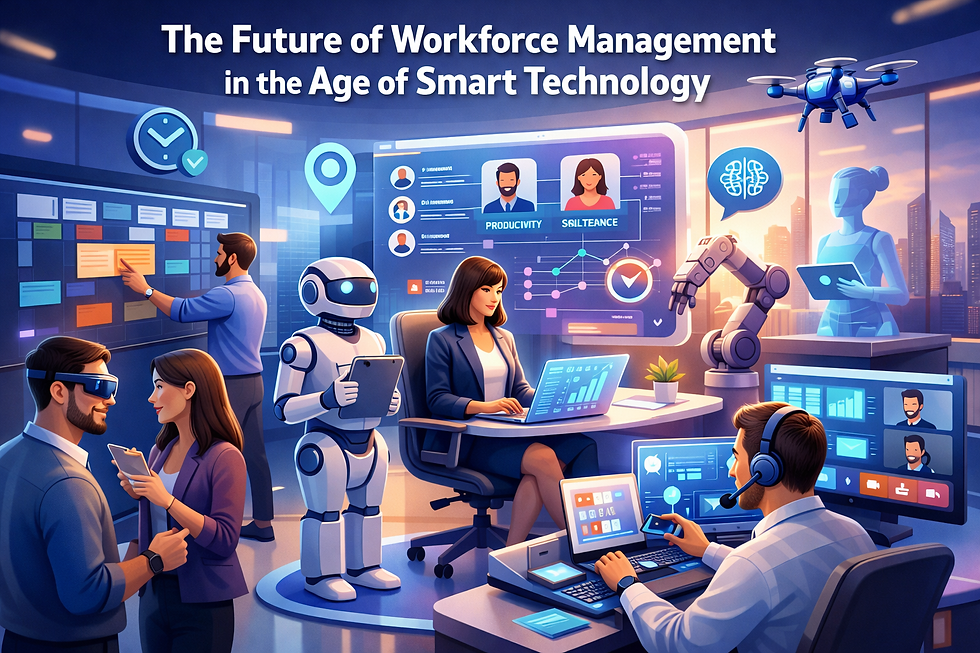
The world of work is undergoing one of its most profound transformations in decades. Smart technology — especially artificial intelligence (AI), automation, and data analytics — is redefining workforce management across industries, reshaping jobs, optimizing workflows, and enhancing productivity like never before. As companies strive to stay competitive in the digital era, integrating these technologies is no longer optional — it’s essential.
From scheduling algorithms to predictive insights, and hybrid work models to employee engagement tools, smart technology is reinventing how companies manage their workforce. Here’s what the future holds and why it matters.
🚀 Smart Technology: What It Brings to Workforce Management
Smart technology introduces powerful capabilities that help businesses do more with less and create workplaces that are both efficient and human-centric.
Key Enhancements
📌 AI-Driven Analytics and Decision-MakingAI and machine learning analyze massive amounts of data in real time, offering insights into employee performance, productivity patterns, and operational bottlenecks. This means managers can make faster, smarter decisions about staffing and task prioritization.
📌 Automated Routine TasksRepetitive administrative tasks like time tracking, payroll, scheduling, and applicant screening can be automated. Up to 69% of routine management functions are projected to be automated, freeing human managers to focus on strategic work.
📌 Predictive Workforce PlanningSmart tools can predict staffing needs, detect potential turnover risks, and forecast labour demand — turning management from reactive to anticipatory.
📊 Realistic Data Shaping the Future
Understanding the numbers helps illustrate just how impactful smart technology will be:
📈 Adoption and Efficiency
Around 25% of organizations already incorporate AI into HR tasks, with 85% reporting better efficiency.
68% of HR departments currently use some form of automation and report time savings and improved accuracy.
AI adoption is increasing rapidly — 92% of Global Capability Centres in India are piloting or scaling AI initiatives — reflecting global momentum toward automated workforce systems.
⏱ Time and Cost Savings
Automated HR systems can reduce onboarding time by 50% and cut administrative work by 10+ hours per week among HR professionals.
Payroll automation can reduce errors by up to 90% and decrease operational costs significantly.
These figures demonstrate that smart workforce tech doesn’t just promise improvements — it delivers measurable outcomes.
Read More: A Practical Guide to Generative AI for HR Professionals: Tools, Use Cases & Career Impact
📌 Emerging Workforce Trends in a Smart Tech Era
Here are the biggest developments shaping the future of workforce management:
🔁 1. Hybrid & Remote Work Optimization
Remote and hybrid work are now permanent fixtures for many organizations. Smart scheduling tools help balance on-site and remote staffing, while mobile access ensures seamless participation from anywhere.
🤖 2. Augmented Human Roles
Rather than replacing humans, smart technology augments human capability, enabling employees to focus on higher-value creative and strategic tasks. In fact, many executives and HR leaders forecast that automation will shift roles instead of just eliminating them.
🧠 3. Predictive Engagement & Well-Being Insights
AI systems beginning in 2026 will monitor sentiment signals, productivity patterns, and engagement indicators — identifying burnout risks and turnover threats before they escalate.
📜 4. Skills Growth and New Job Roles
The rise of AI within HR and management is already creating hybrid roles such as AI Trainers, People Data Leads, and ethics-focused governance managers.
🔐 5. Security, Compliance & Ethical Standards
With workforce data becoming more integrated, robust security — including zero-trust access and biometrics — is crucial to protect sensitive information and stay compliant.
🧩 Challenges & Human Considerations
While smart workforce management brings benefits, there are important challenges to navigate:
Upskilling and training gaps: Many employees aren’t yet fluent with new tools — and uneven adoption across roles can increase workplace friction.
Ethical and bias concerns: AI implementation requires transparency and careful oversight, especially in hiring decisions.
Economic shifts: Smart tech may displace some roles, but it also creates new opportunities; organizations must invest in reskilling initiatives to adapt their workforce for future jobs.
🏁 Final Thoughts: A Collaborative Future
The future of workforce management is not about machines versus humans — it’s about machines with humans. Smart technology will reshape how we work, and in doing so, push organizations toward more efficient, data-driven, and humane workplaces.
By embracing automation thoughtfully, investing in skills, and using technology to empower rather than replace people, businesses can unlock unparalleled performance — while keeping their workforce engaged, fulfilled, and future-ready. Acquiring a Generative AI Professional Certification can equip professionals with the skills needed to harness AI tools effectively and drive innovation in HR practices.


Comments