How Economic Changes Are Affecting Project Management Jobs in 2025
- Mira roy
- Nov 11, 2025
- 4 min read

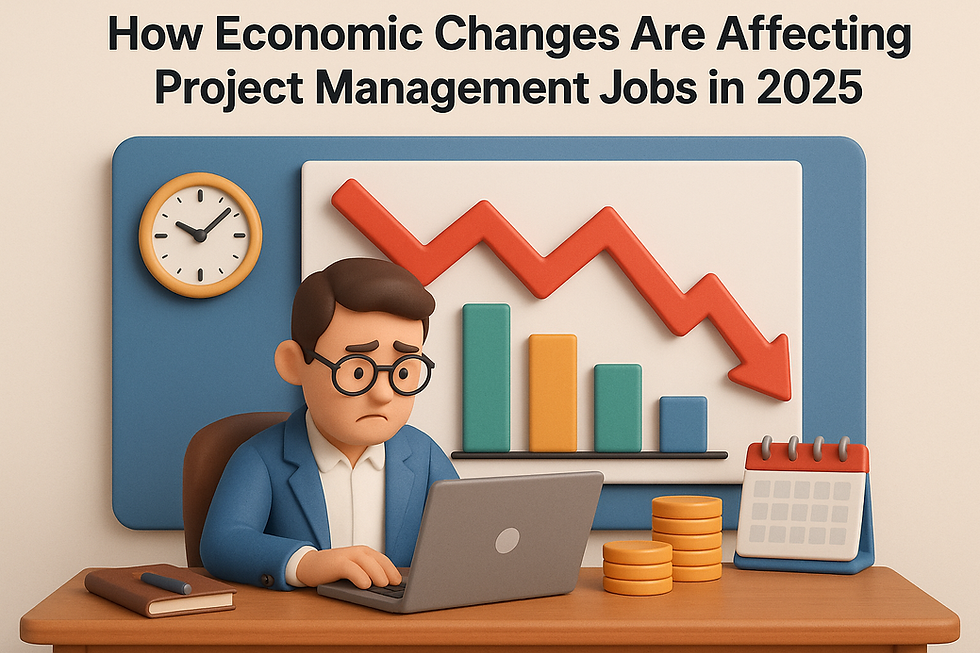
The world of project management is experiencing significant shifts in 2025 due to economic changes, technological advancements, and evolving industry needs. Economic factors such as inflation, market volatility, and global trade shifts are altering the way businesses approach projects and manage resources. These changes are not just reshaping industries but also influencing the skills, expectations, and roles of project managers.
In this article, we’ll explore how economic changes are affecting project management jobs, highlighting trends, challenges, and opportunities for professionals in this field.
The Impact of Economic Changes on Project Management
As economies around the world fluctuate, businesses are being forced to adapt. This has a direct impact on project management, a role that requires flexibility, strategic thinking, and an understanding of economic dynamics. Here’s how:
Increased Demand for Cost-Effective Solutions
With inflationary pressures and economic uncertainty, companies are increasingly focusing on cost optimization. Project managers are now expected to deliver more with less, often under tighter budgets and with fewer resources.
According to a 2025 survey by PMI (Project Management Institute), 68% of project managers report being tasked with reducing costs while maintaining quality and meeting deadlines.
Shift Towards Agile and Flexible Project Management
The growing pace of change in the business world has made agile project management methodologies more popular. In times of economic unpredictability, businesses need to be flexible and responsive to market changes. Agile project management allows teams to adapt quickly, making it a valuable skill for project managers in 2025.
Agile frameworks, like Scrum and Kanban, are no longer confined to IT or software industries; they are being adopted across a wide range of sectors, including construction, healthcare, and finance.
Remote and Hybrid Work Models
The global shift towards remote and hybrid work environments, accelerated by the pandemic, has persisted into 2025. As more businesses adopt flexible working arrangements, project managers need to be adept at managing distributed teams, coordinating across different time zones, and utilizing digital collaboration tools.
According to a 2025 report by McKinsey, 52% of companies now operate with a hybrid workforce, a trend that is set to continue. Project managers with strong virtual communication and remote team leadership skills are in high demand.
Technology-Driven Transformation
In today’s digital economy, project management is increasingly reliant on advanced technologies such as AI, machine learning, and data analytics. These technologies can help streamline processes, predict project outcomes, and automate administrative tasks.
For instance, AI-powered project management tools like Monday.com or Smartsheet are becoming indispensable for tracking project milestones, identifying risks, and forecasting budgets. Project managers who can leverage these tools effectively will have a competitive edge.
Talent Shortage and Skill Gaps
Despite the growing demand for skilled project managers, there is a noticeable skills gap in the industry. A 2025 Talent Gap Report by PMI found that 50% of organizations struggle to find qualified project managers, with a particular need for professionals who can handle both traditional and agile methodologies.
As a result, project managers with expertise in these areas, as well as knowledge in advanced project management software and data analytics, are highly sought after.
Wondering whether CAPM vs PMP is the right certification for you? Discover the salary potential, career scope, and difficulty comparison for 2025 in our latest blog!
Key Skills for Project Managers in 2025
With these economic changes in mind, project managers must evolve to remain relevant in the job market. Some key skills for 2025 include:
Agile Methodology Expertise: The ability to implement agile practices across various industries will be crucial. Project managers need to be comfortable with iterative work cycles, flexible planning, and quick decision-making.
Digital Literacy: Knowledge of project management software and the ability to use AI tools to track performance and manage risks will be important for efficiency.
Cost Management Skills: With businesses focused on cutting costs and maximizing profits, project managers must possess excellent budgeting and cost management skills.
Leadership in Hybrid Teams: Managing remote and hybrid teams requires strong communication, organizational skills, and cultural awareness. Ensuring team alignment and morale in a dispersed environment is key to successful project delivery.
Risk Management: Economic changes often bring uncertainty, so project managers must be adept at identifying potential risks and developing mitigation strategies.
Challenges for Project Managers in 2025
Increased Pressure to Deliver on Time and Budget: Economic uncertainty means there is less room for error. Project managers are expected to deliver projects on time and within budget despite fluctuating market conditions.
Managing Remote Teams: Although remote work offers flexibility, it also introduces challenges in communication, team cohesion, and collaboration, especially for large or complex projects.
Balancing Innovation with Cost-Cutting: In many industries, there is a constant tension between driving innovation and reducing expenses. Project managers must find ways to innovate while adhering to strict budget constraints.
Opportunities for Project Managers
Despite the challenges, economic changes also present opportunities for growth in project management roles. These include:
Diverse Industry Applications: Project management skills are transferable across industries. From healthcare to finance to technology, skilled project managers are in demand in almost every sector.
Leadership Roles: As organizations prioritize project success to maintain competitive advantage, project managers with a strong track record are being elevated to leadership roles, including Chief Project Officer (CPO).
Consulting Opportunities: Experienced project managers are increasingly being sought out for consulting roles, helping organizations navigate complex projects or implement best practices in project management.
Conclusion
In 2025, economic changes are reshaping the project management landscape. Project managers must adapt to cost-cutting pressures, embrace new technologies, and lead agile, hybrid teams to succeed. While these changes present challenges, they also offer ample opportunities for those who can stay ahead of industry trends and continuously develop their skills. As businesses continue to evolve in response to economic shifts, the demand for skilled and adaptable project managers will only increase.
To enhance your project management skills and stay ahead in the AI-driven world, pursuing a PMP certification, training, and course can provide the essential knowledge and practical tools needed to lead successful projects.


Comments